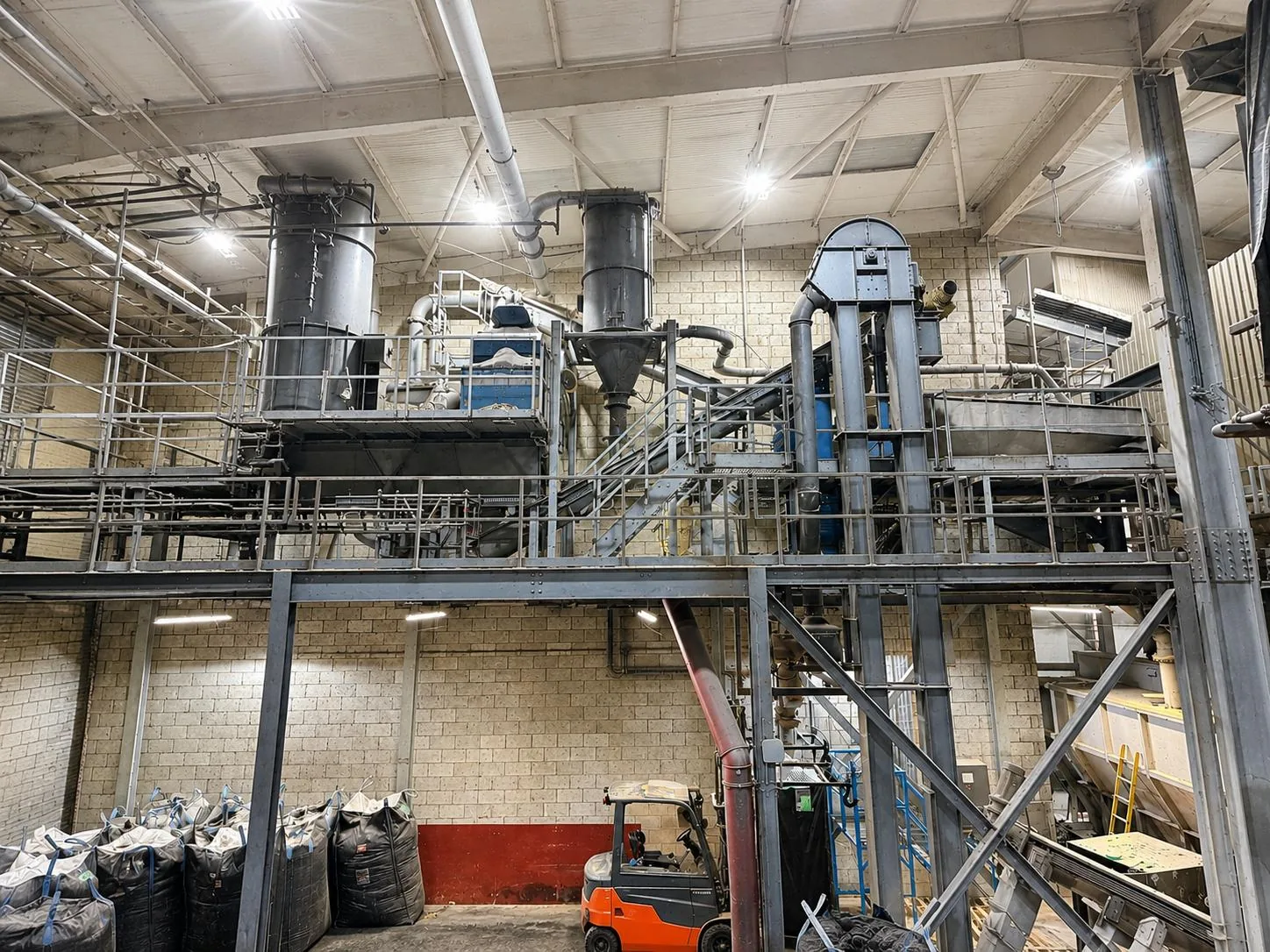
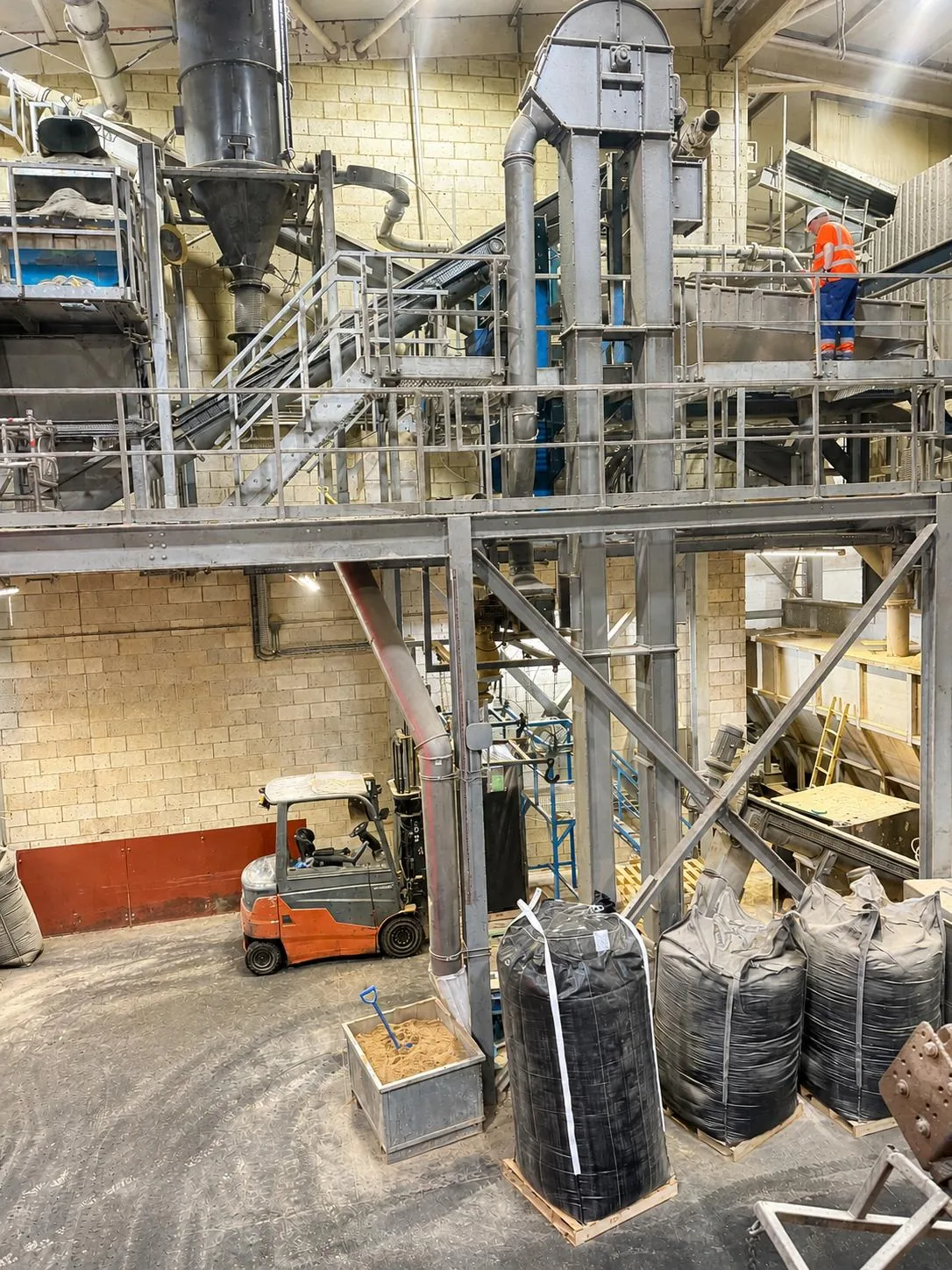
Buckingham Electrical delivered the complete electrical package for a new grinding plant at a rendering and animal by-product processing facility in Low Marnham, near Newark, Nottinghamshire. The plant converts cooked raw material into a consistently graded finished meal, and it sits on the critical path of the site's production process — if the grinding plant stops, the line stops.
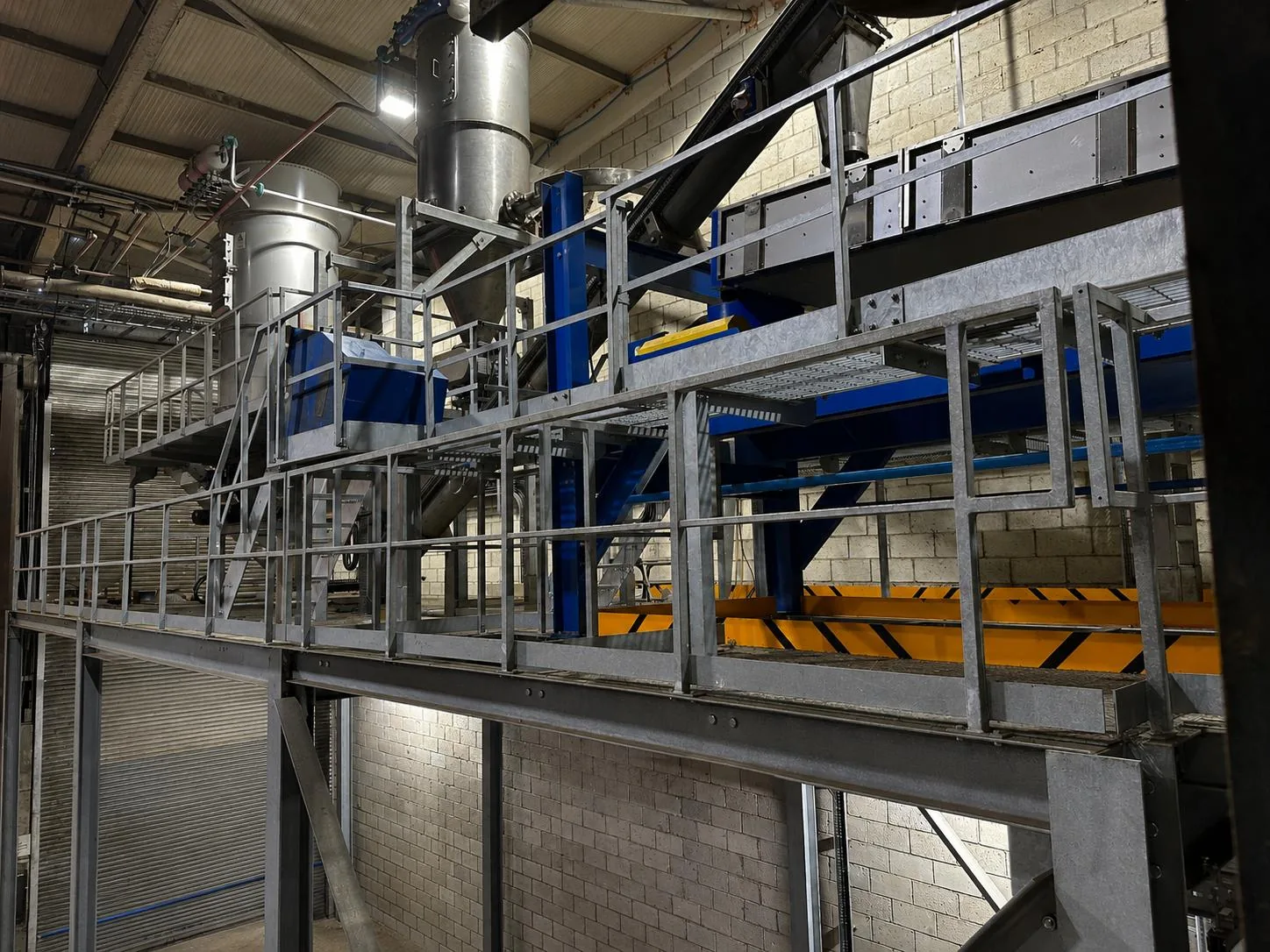
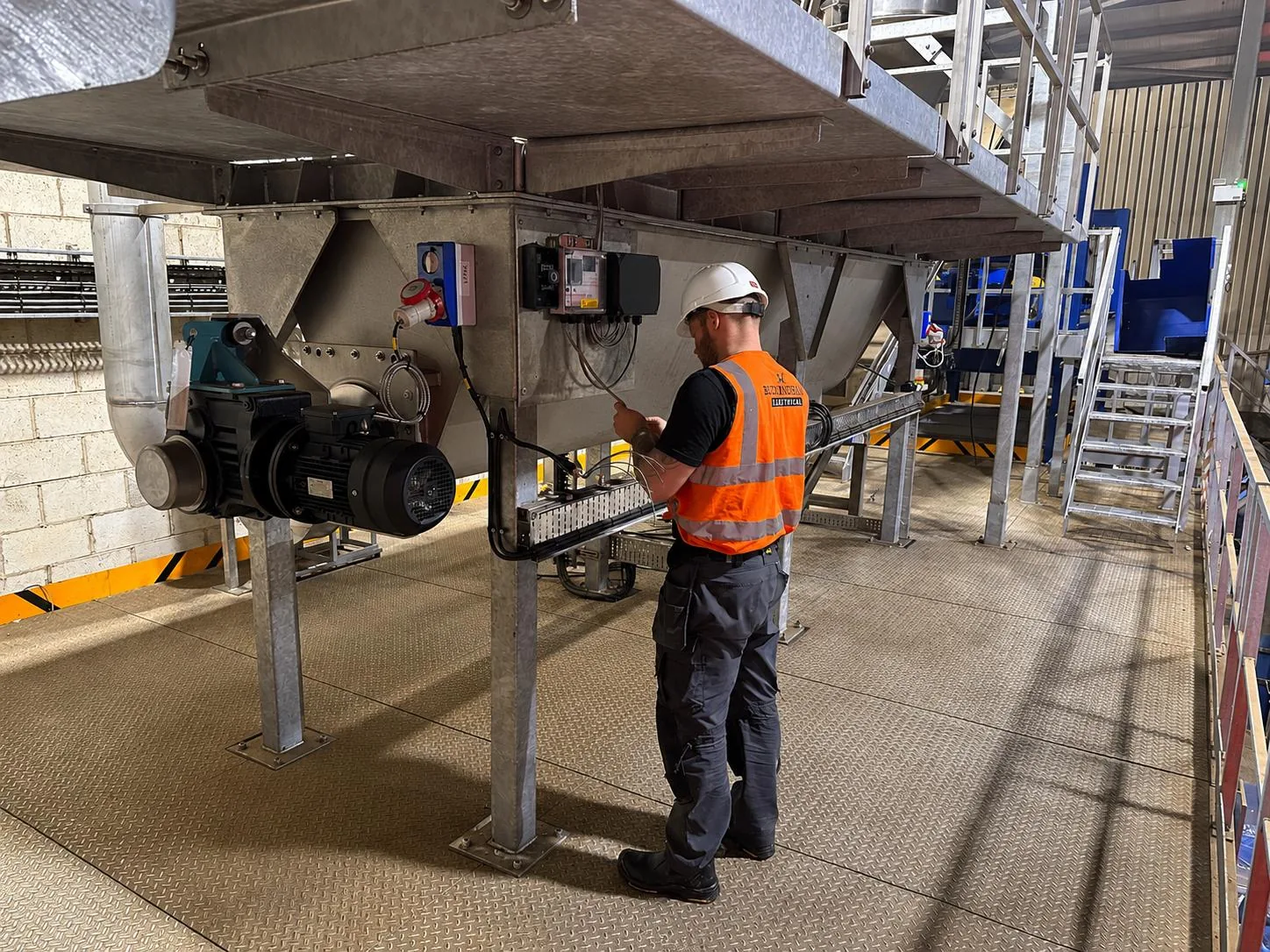
The installation spans two levels, mezzanine and ground floor, and brought power distribution, motor control, process automation, safety systems and instrumentation together into one coherent installation. We were responsible for the work from first fix through to final commissioning alongside the client.


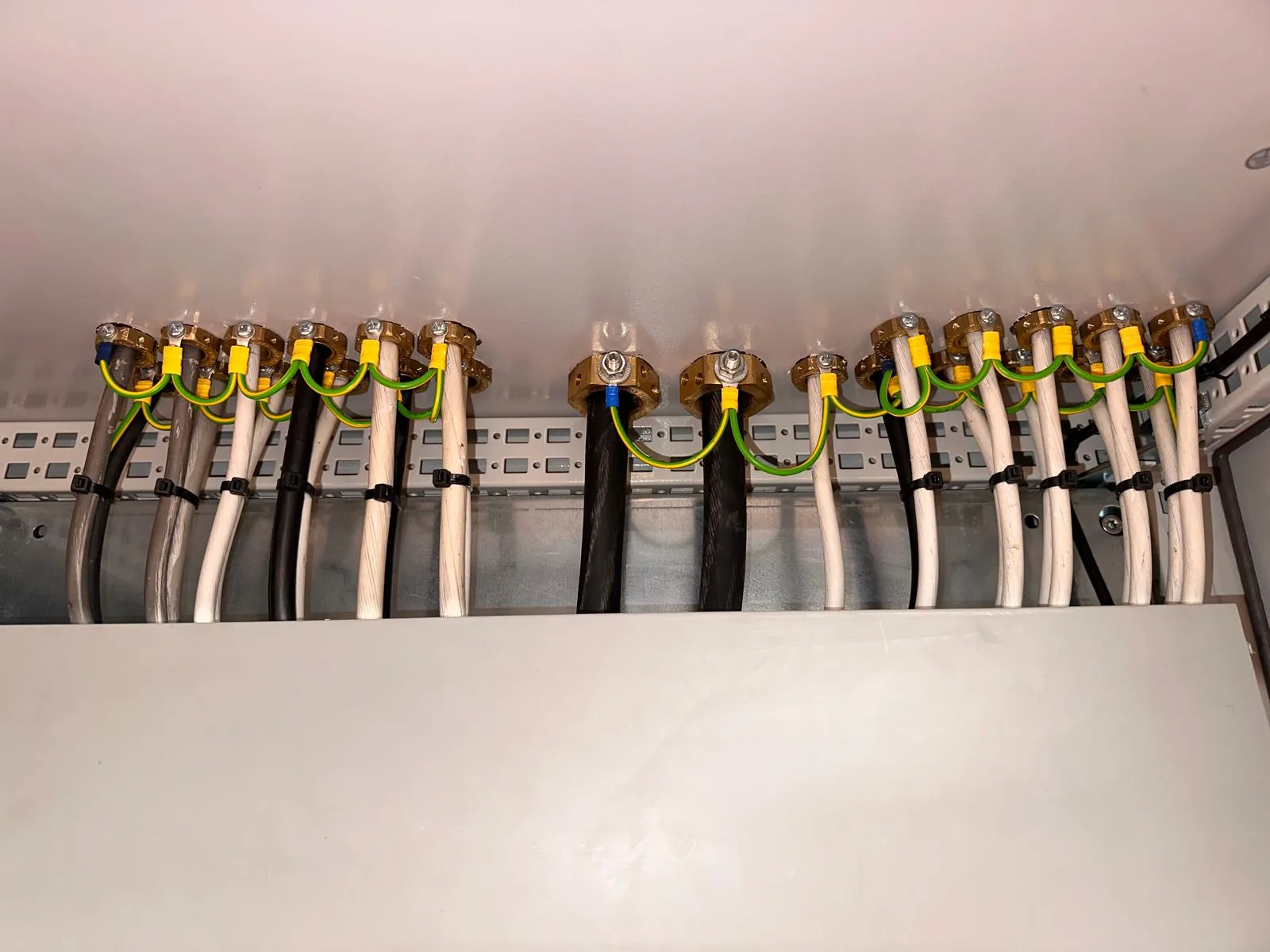
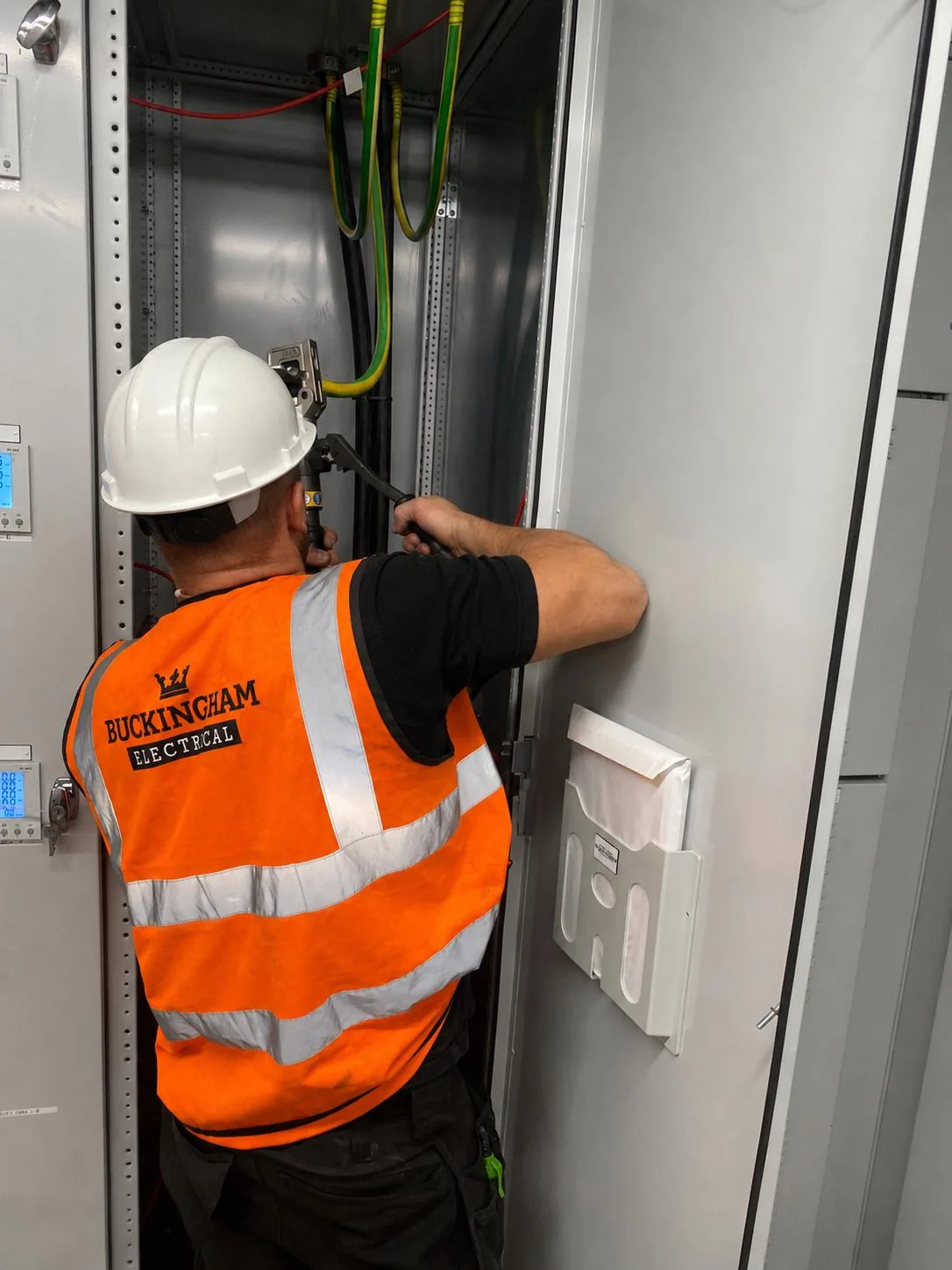
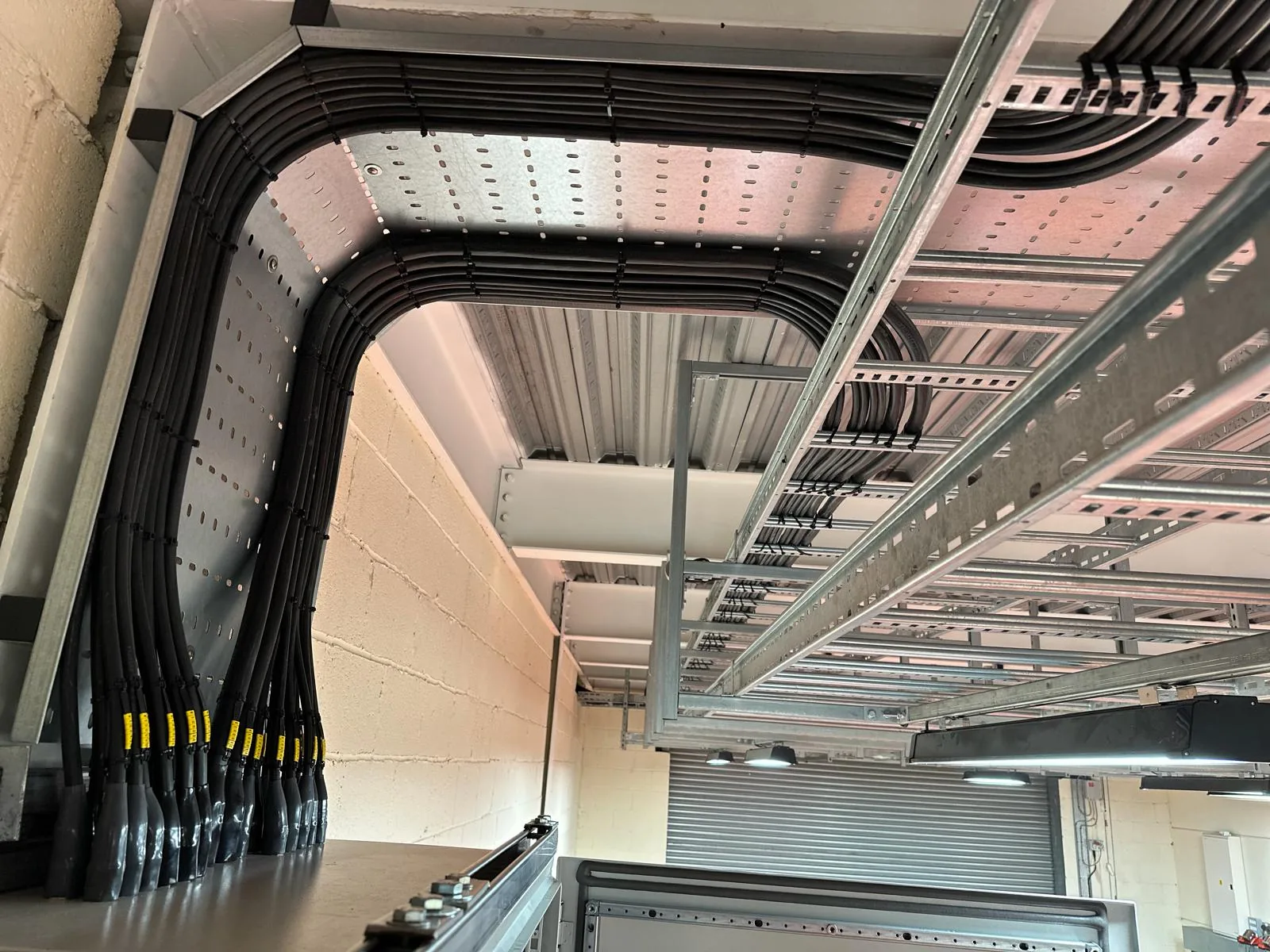
A new 600A sub-main supply feeds the grinding plant, installed as parallel 120mm² 4-core XLPE/SWA cables with a dedicated 120mm² protective earth conductor. The supply is protected by a Schneider Compact NSX630N 630A MCCB.
Sizing at 600A was not about today's load. A grinding plant with a 90kW hammer mill in a rework loop draws hard and intermittently, and the client needed headroom for future equipment on the same distribution. Running the sub-main as parallel cables kept the pulling and terminating practical on a live site.
This is the same containment and power discipline we apply across our industrial electrical work — high-current distribution designed around the process, not retrofitted to it.


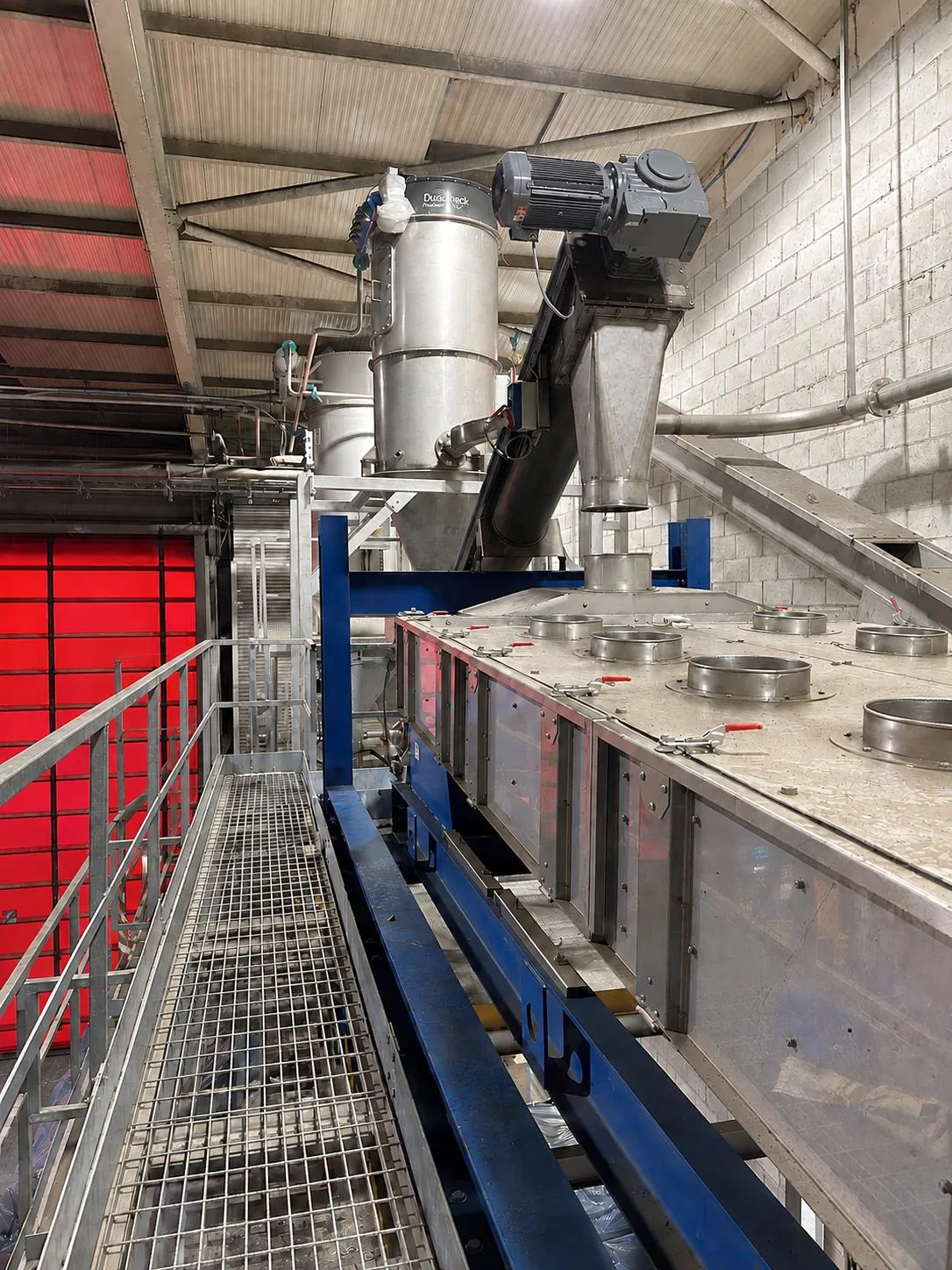
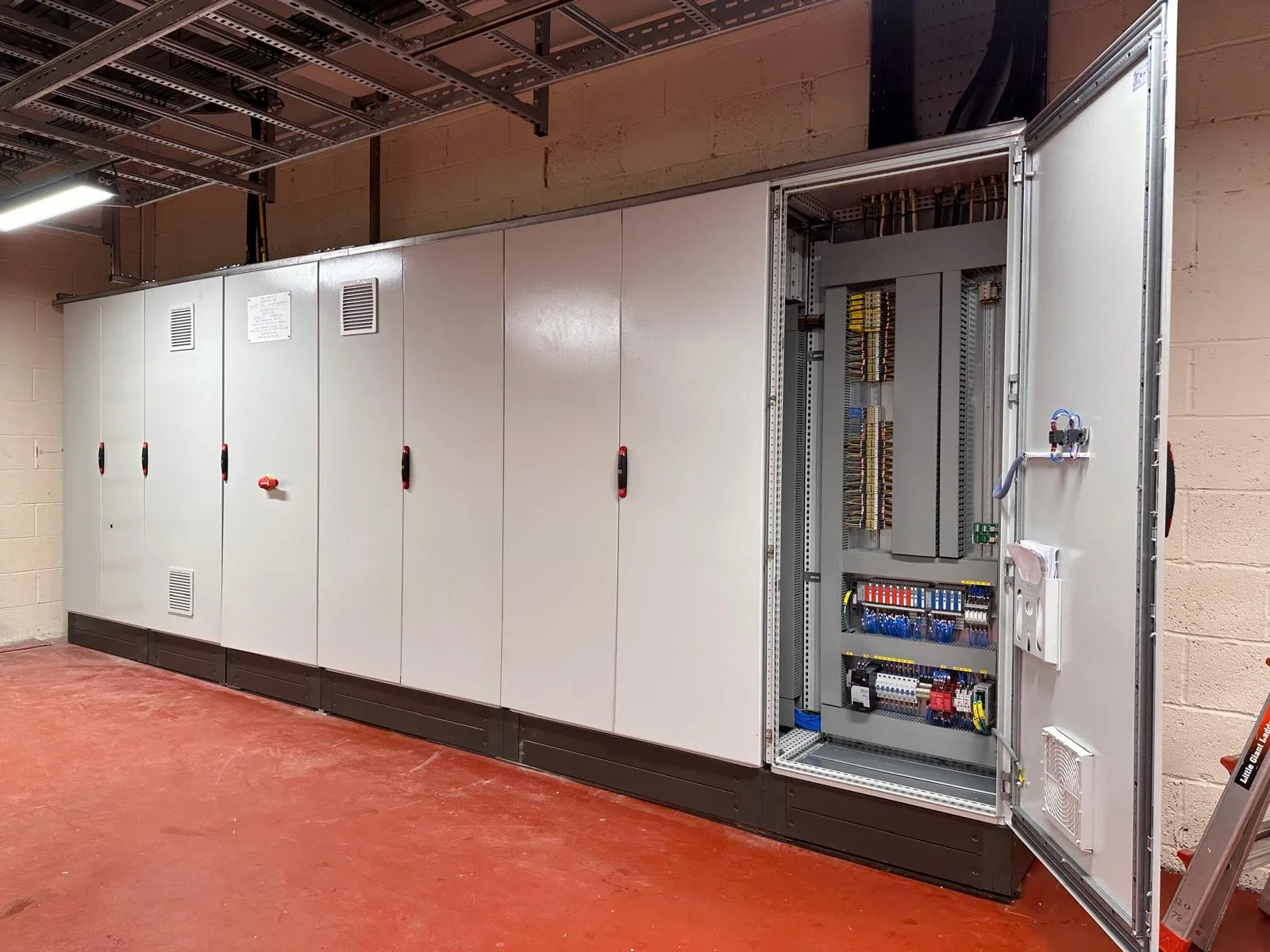
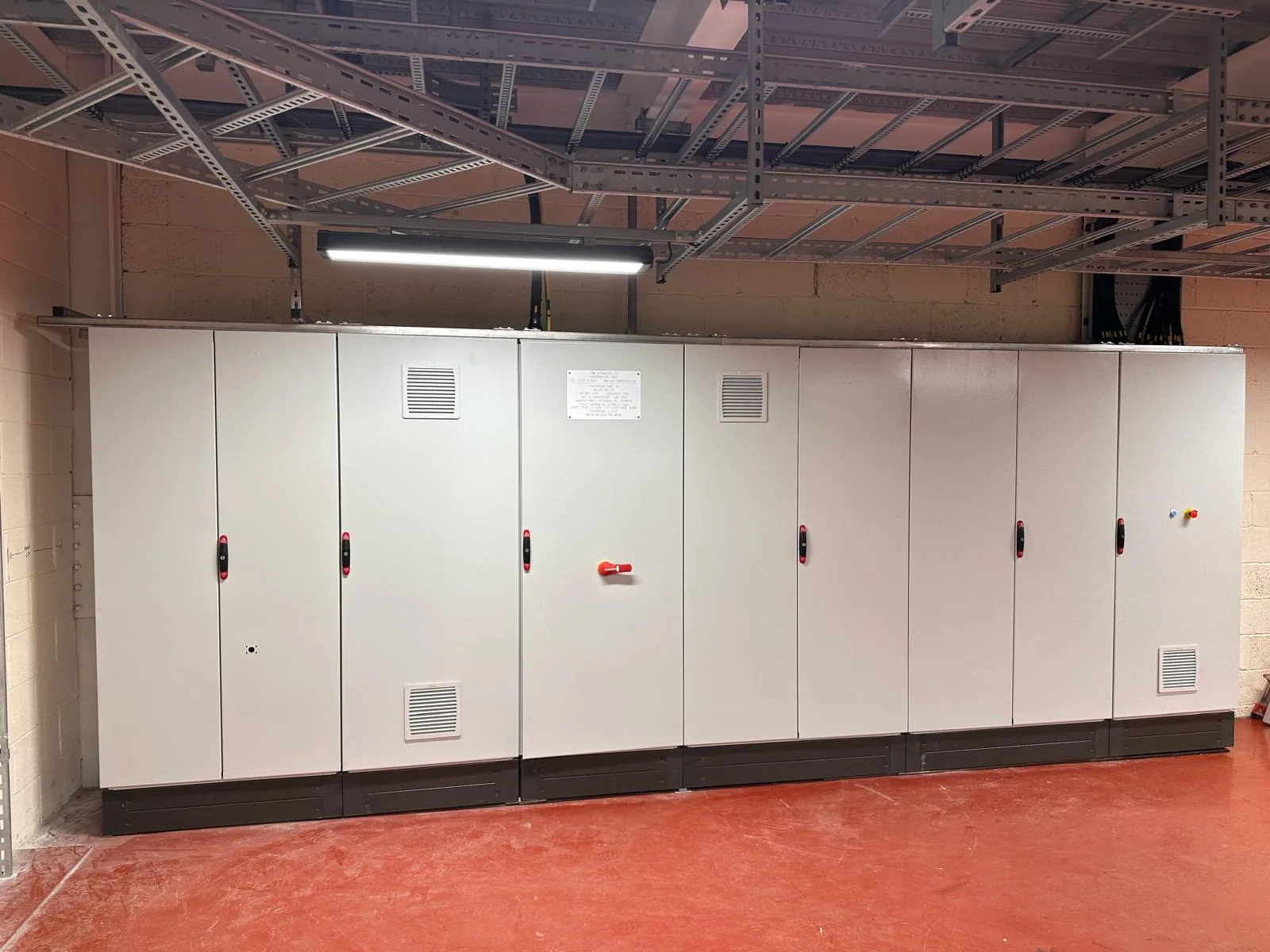
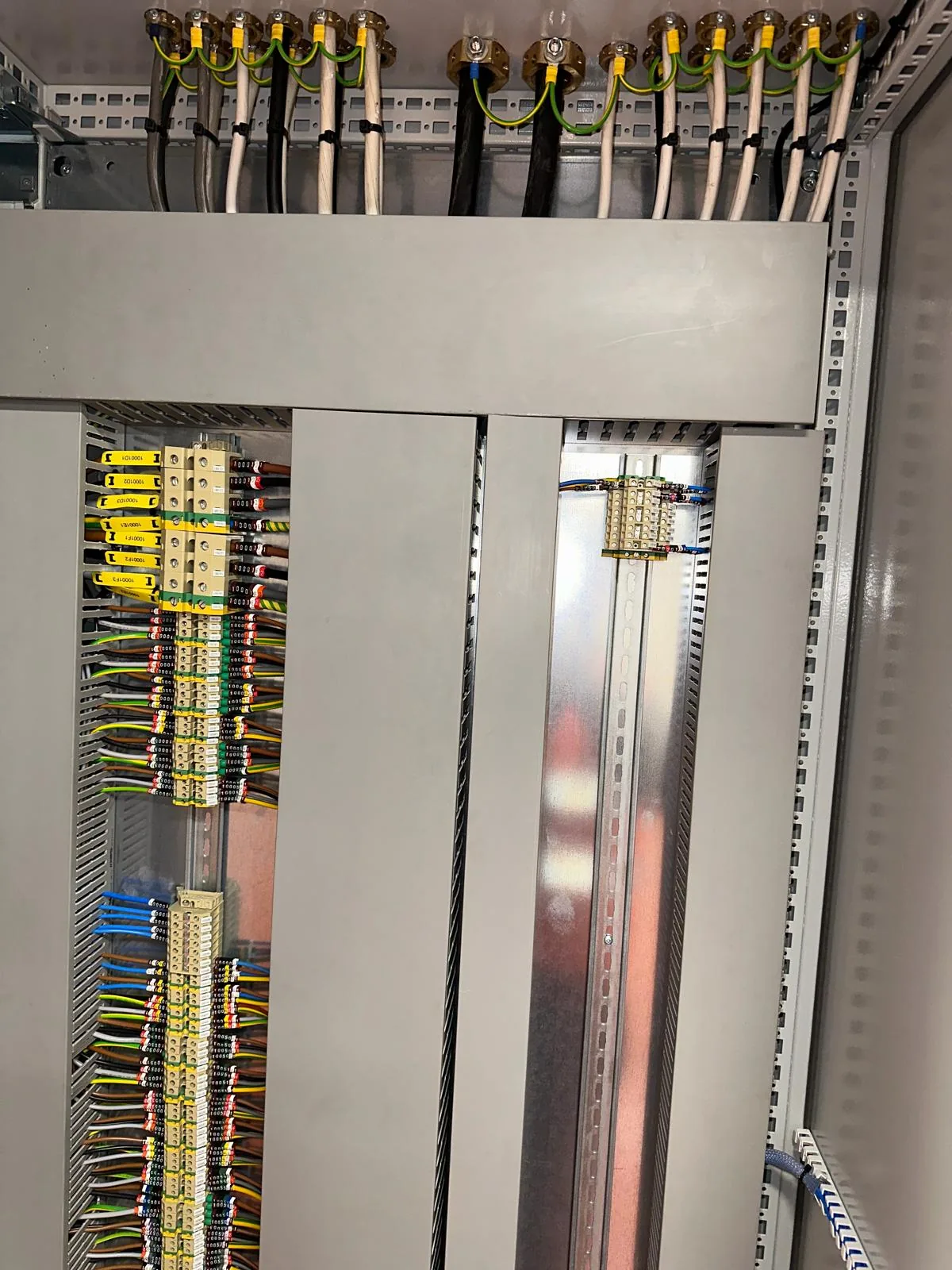
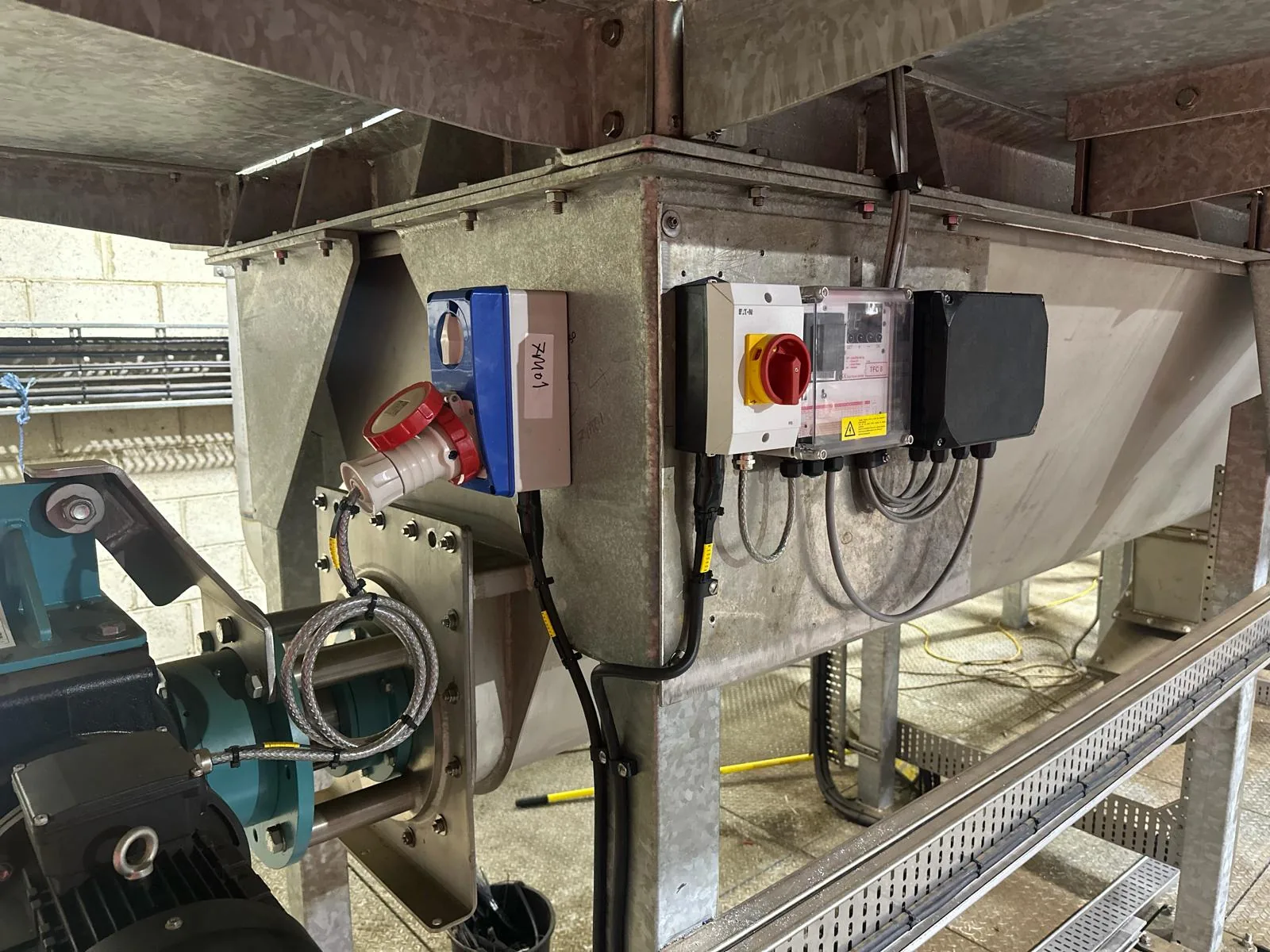
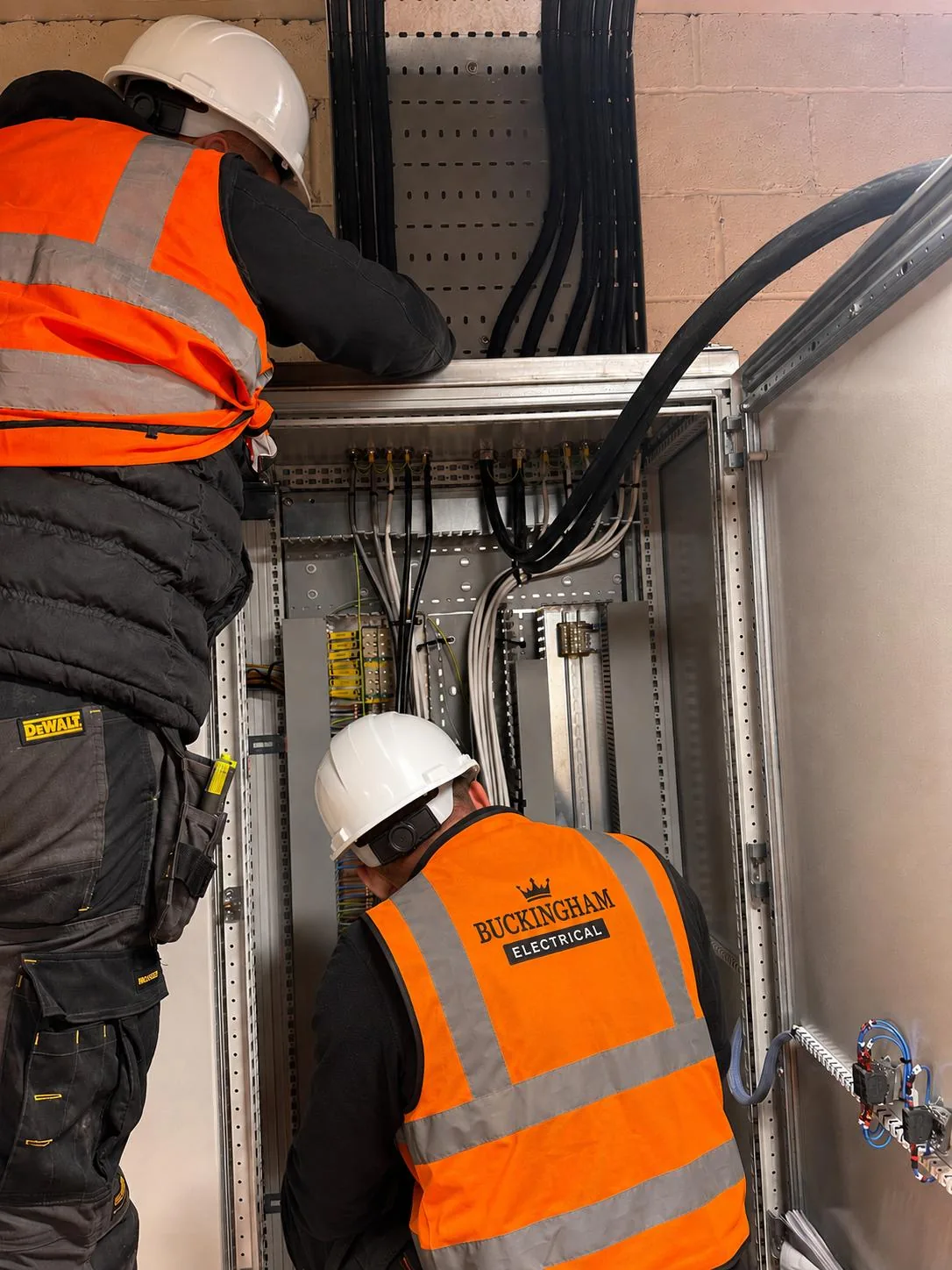
The main motor control panel houses multiple variable speed drives controlling the conveyor screws, process motors and auxiliary equipment throughout the plant. Speed control is what keeps the process stable: the levelling screw, the twin discharge screws and the transport equipment all need to be trimmed against each other so material moves at a consistent rate rather than surging or bridging.
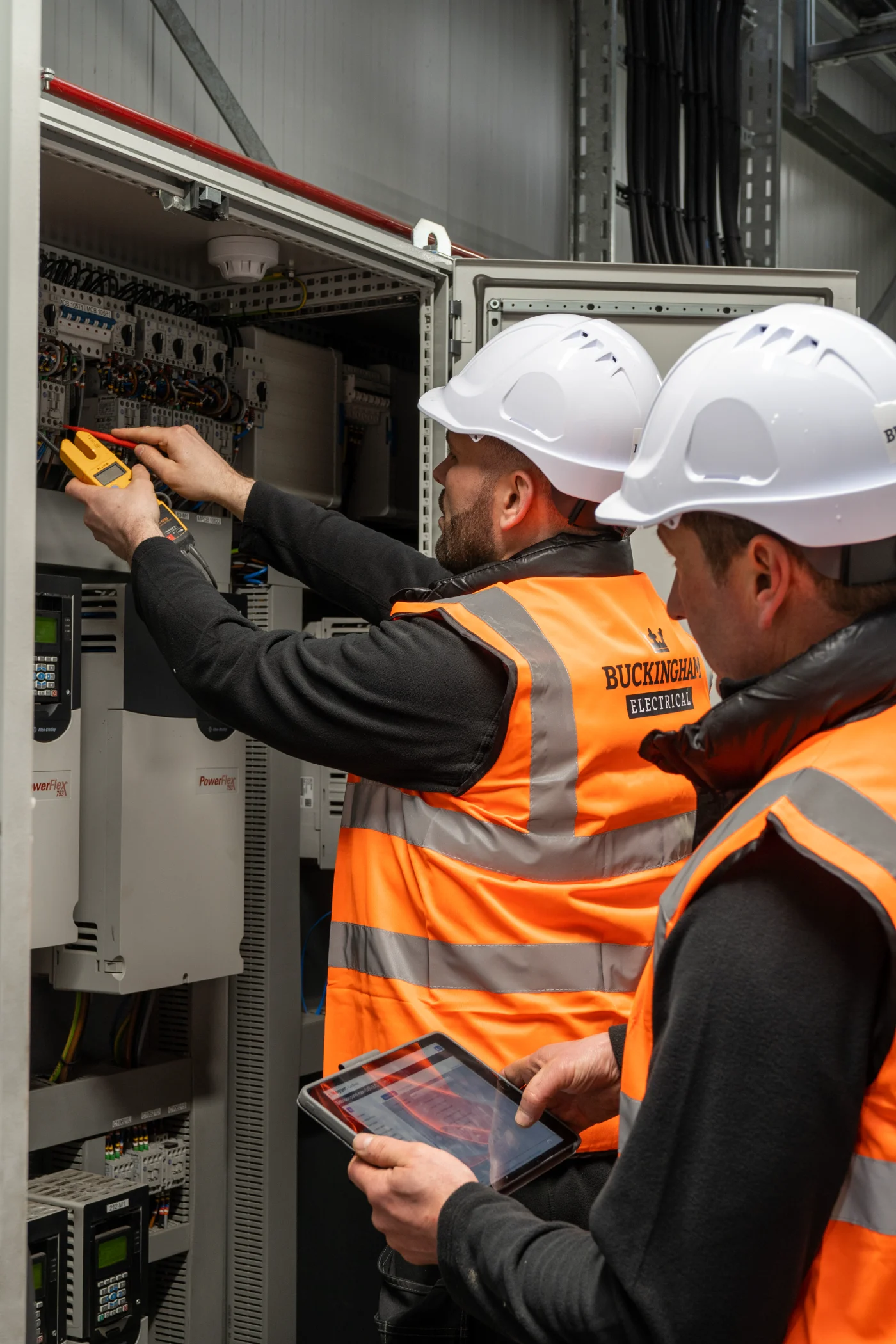
We installed the motor control panel, the field wiring and the drive terminations, then commissioned each drive against its motor as part of handover. Every VSD was checked for rotation, ramp and current draw under process conditions, not just on no-load.
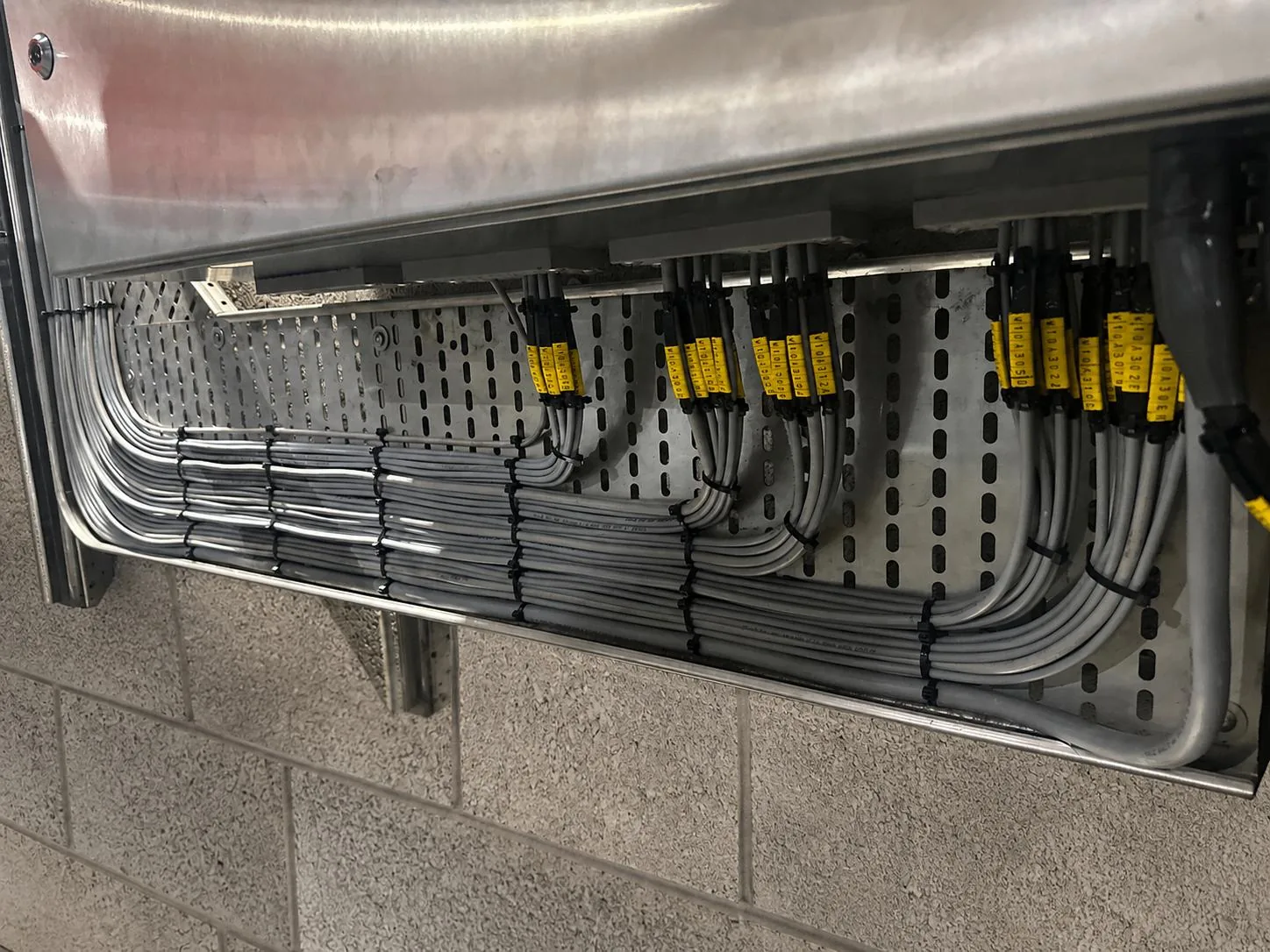
Panel building, termination and drive commissioning are core control wiring work for us.


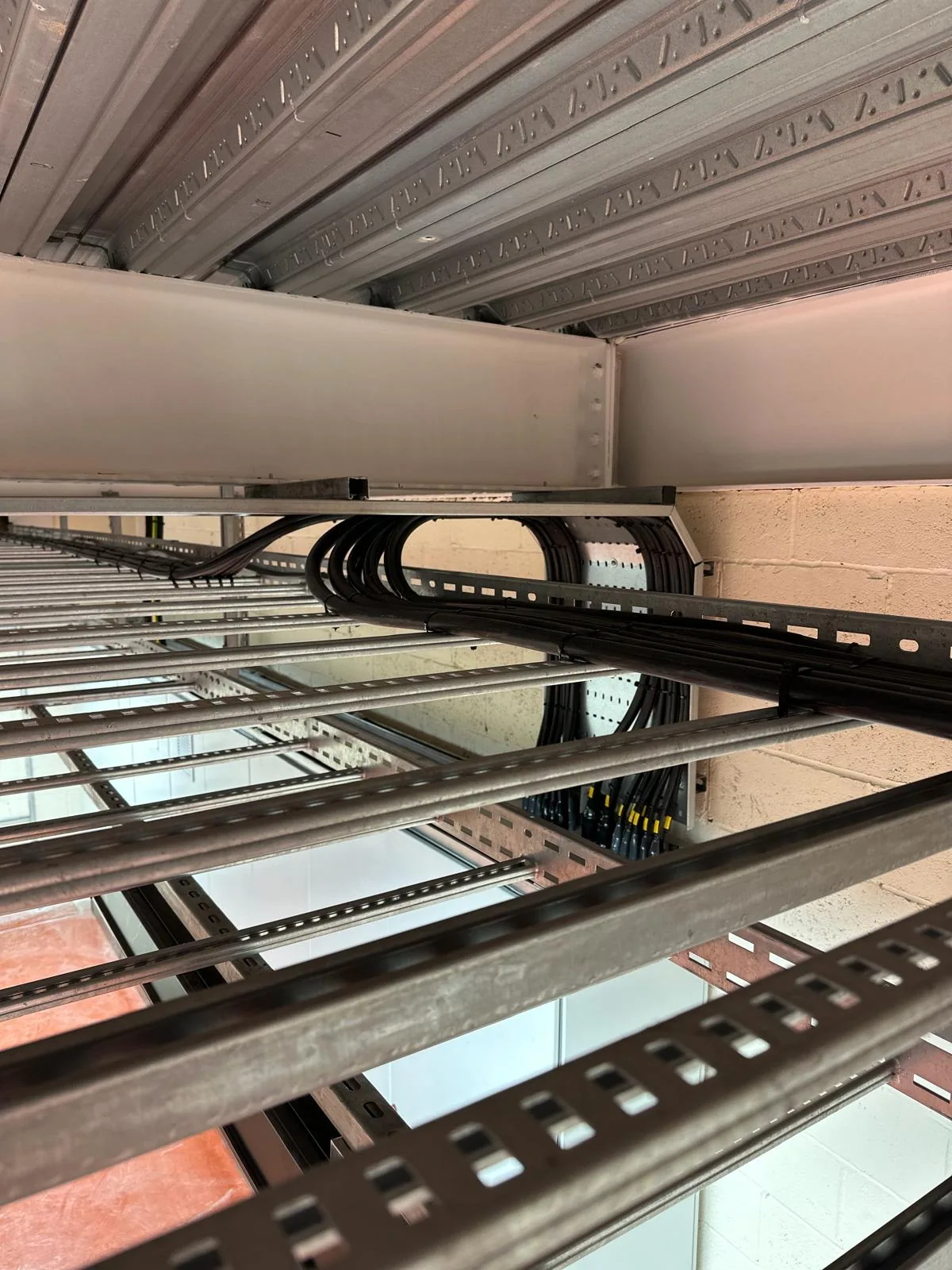
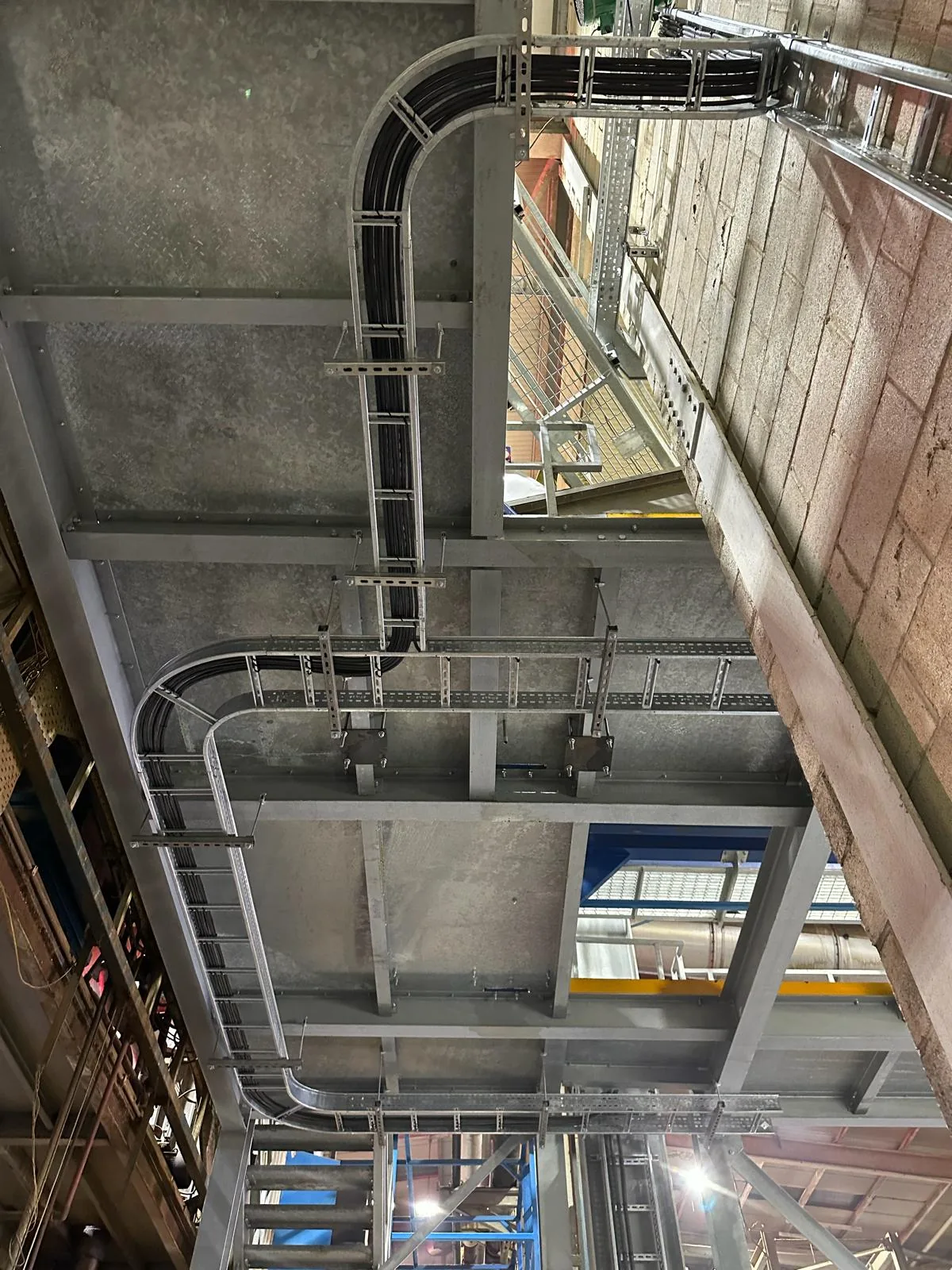
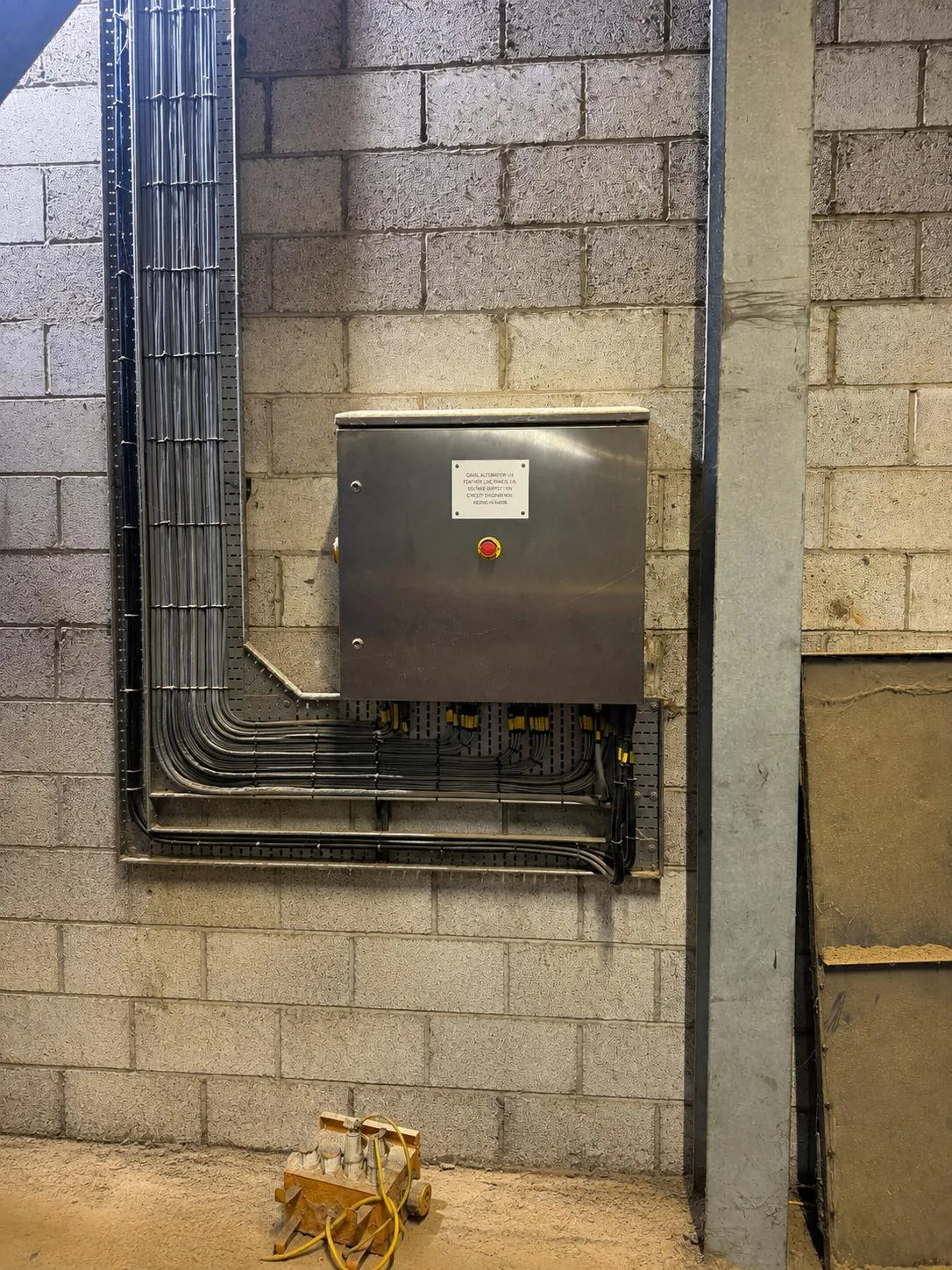
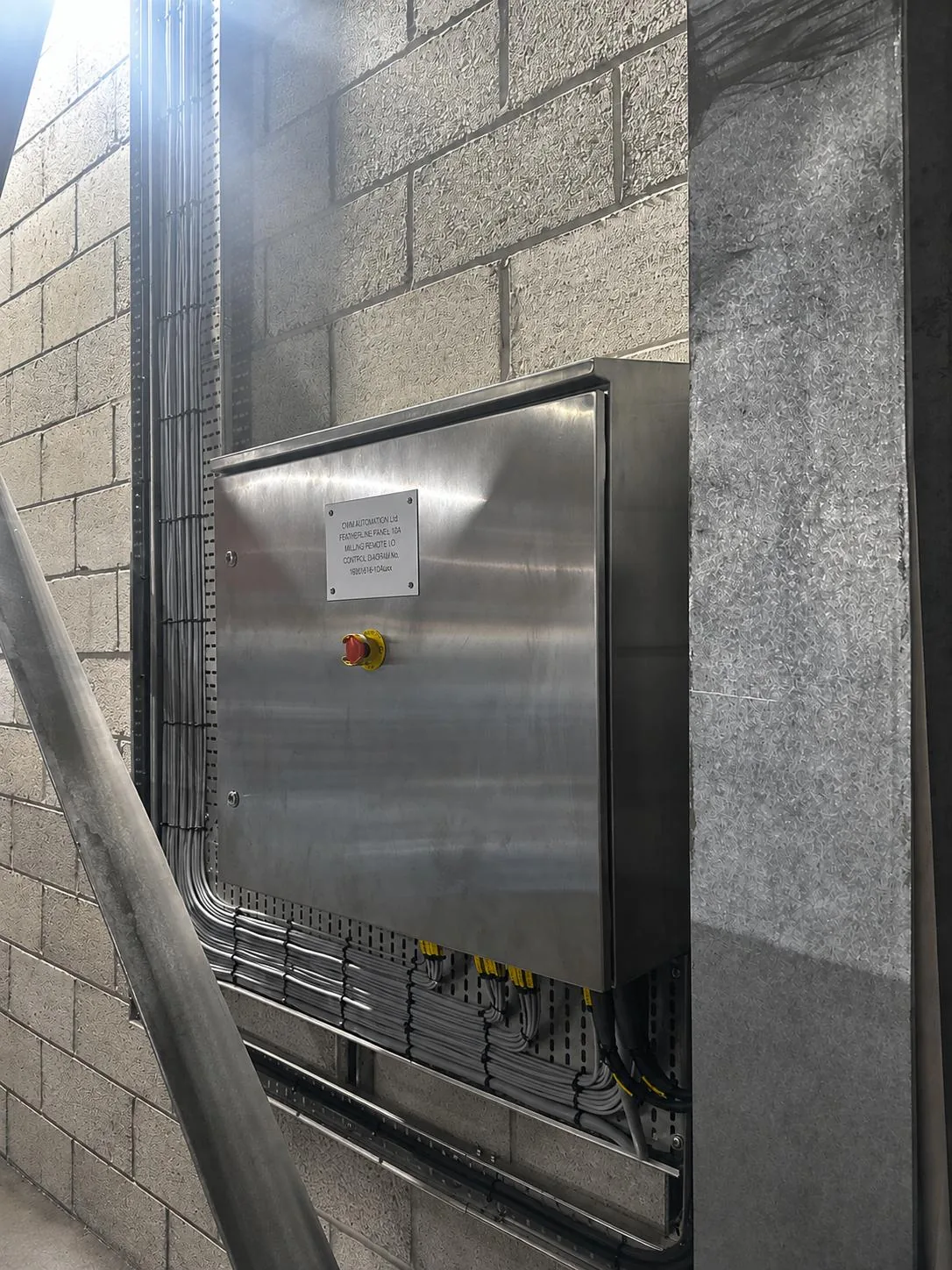
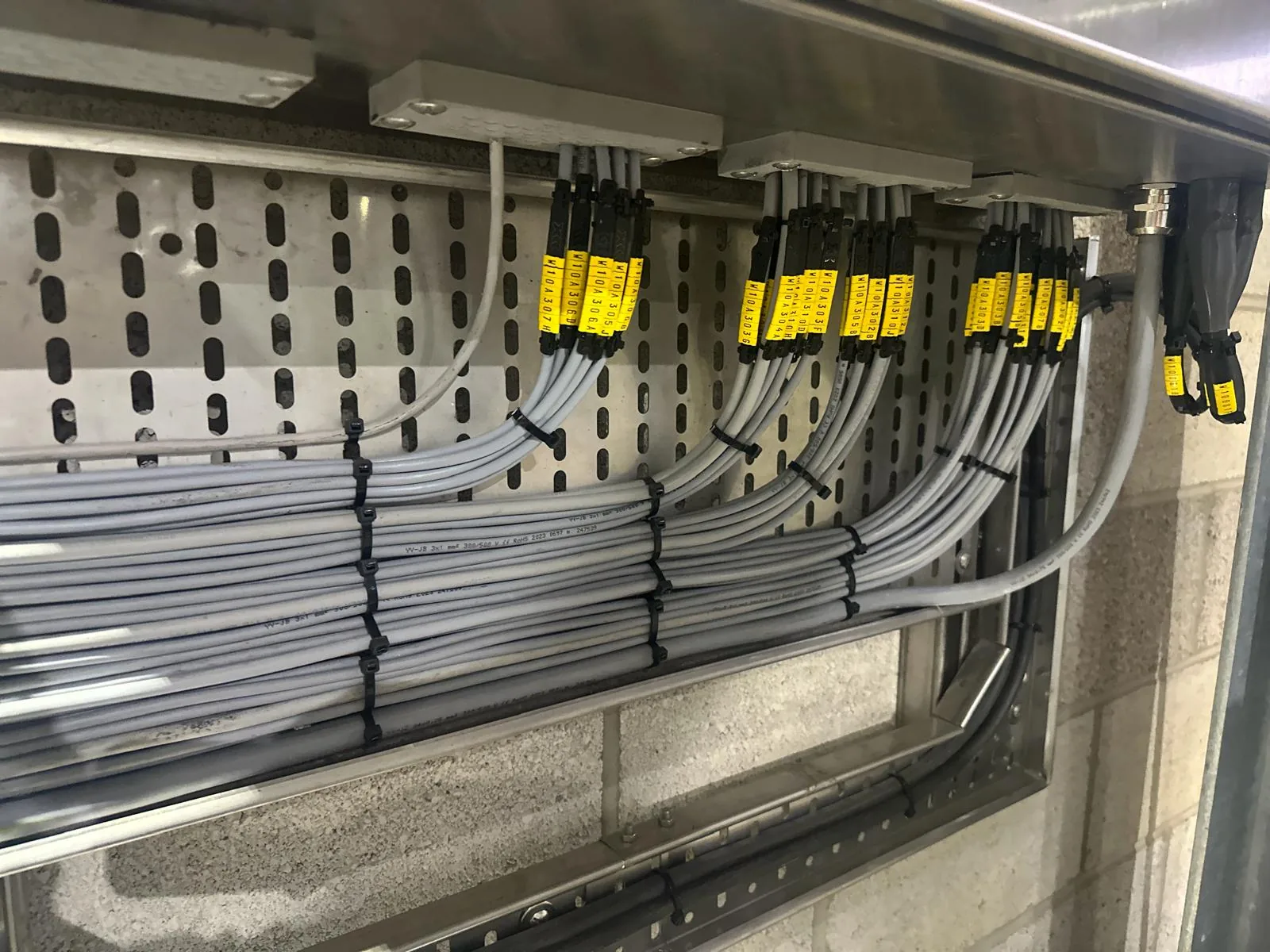
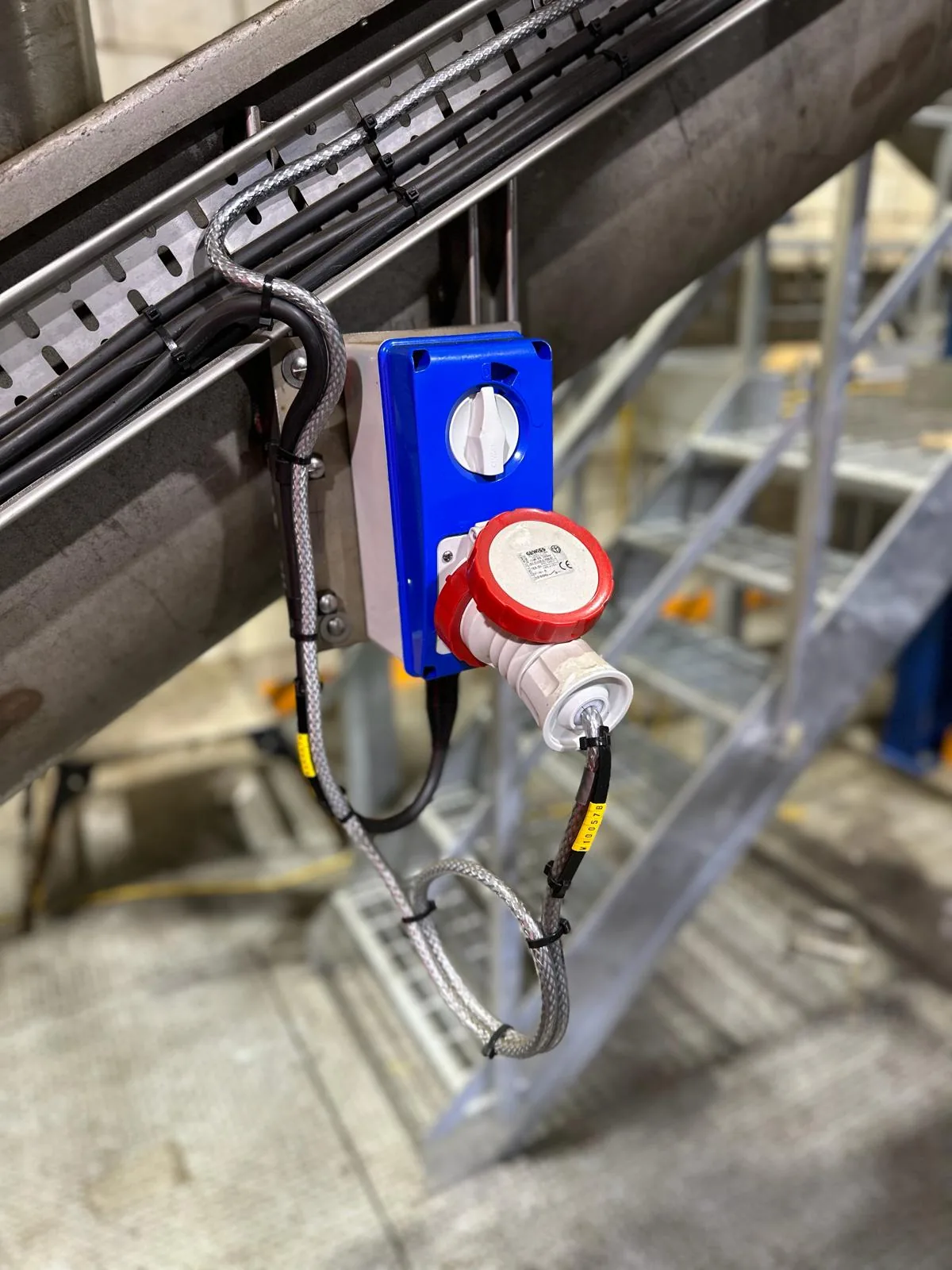
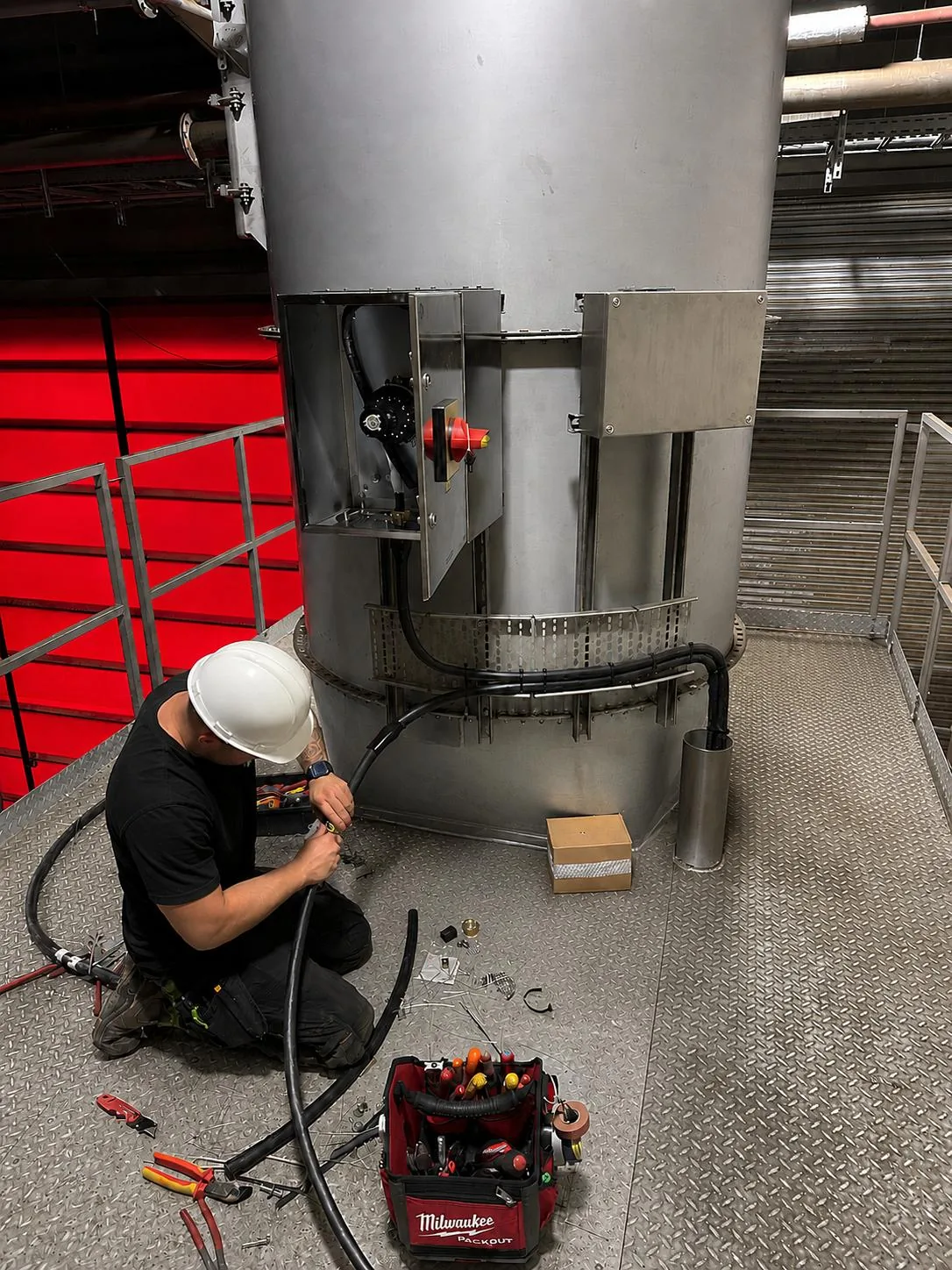
Routing services across a mezzanine and a ground floor in a wash-down processing environment made containment one of the largest single elements of the job. We designed and installed the complete system in stainless steel cable ladder, cable tray and conduit.
Every route was set out to hold segregation between power, control, communications and instrumentation cabling — a fibre optic network sharing a route with a 600A sub-main and 90kW motor circuits gives you no margin for lazy separation. Routes were also planned so that the plant can be maintained afterwards: access to the panels, the drives and the field devices without stripping containment out.
Stainless was specified for the environment rather than the appearance. It survives wash-down and it does not shed into the process.


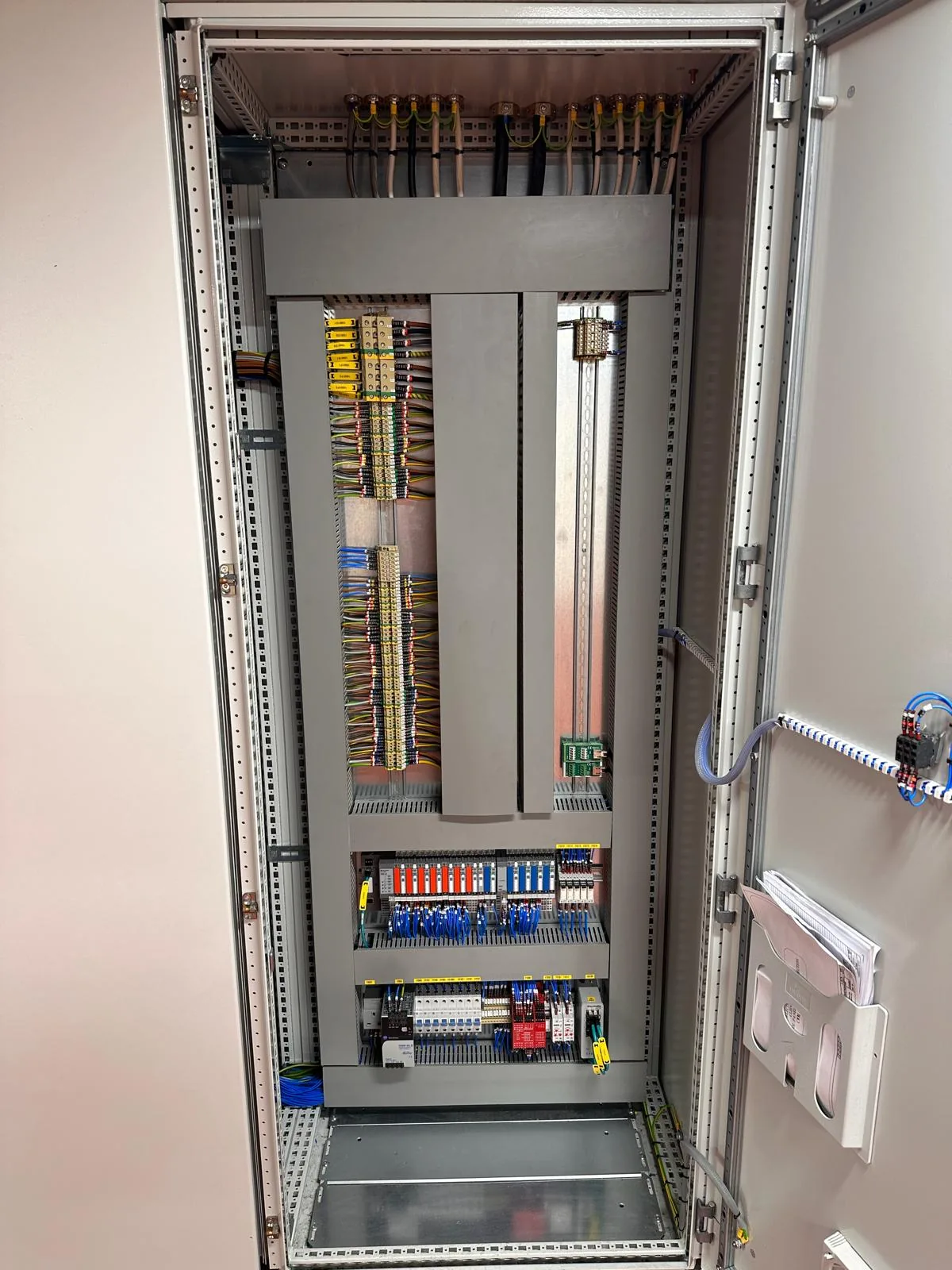
The grinding plant runs as a fully automated process. The main motor control panel communicates with the site's existing PLC over a fibre optic network, which gives high-speed, electrically immune communications between the field equipment and the central control system — the right choice on a site with large drives and long cable runs.
A local remote I/O panel installed adjacent to the process collects every field signal and communicates it back to the PLC, rather than running dozens of individual multicores back to the switchroom. The digital and analogue inputs and outputs it handles include:
Integrating new plant into an existing site automation system is work we do regularly — see our category 3 material processing line in Bradford, where two I/O panels were added onto a live automation system.


Cooked material is pneumatically conveyed roughly 80 metres by a transport blower into the reception vessel. A rotary valve regulates the material entering the first conveyor screw, which feeds a Locker Screen where the material is milled and graded through different sized mesh.
Material already meeting specification drops straight into the holding bin. A levelling — or buffer — screw prevents the material bridging and holds a consistent feed into the twin discharge screws below.
Oversized material is automatically diverted into a rework loop, through a 90kW (155A) star-delta hammer mill that reduces the particle size before returning it to the Locker Screen. That closed loop runs until the product is on specification.
Finished product is discharged through the conveyor system into a bucket elevator, transferred overhead and conveyed into the automated bagging system ready for packaging. Every one of those transitions is a motor, an instrument or an interlock we installed, wired and commissioned.


Safety was designed into the control philosophy rather than bolted on. Dedicated safety circuits run throughout the process, including protection around the hammer mill and pressure monitoring on the reception vessel, and they are integrated into the control system so that equipment can only run under safe process conditions — without stopping the plant unnecessarily and costing the client throughput.
Buckingham Electrical carried out the full commissioning of the grinding plant, verifying every power, control and safety function before handover:
The client has an automated, safety-integrated milling process that holds a consistent finished product through intelligent process control, and a distribution system with the capacity to take future plant. Stainless containment, 600A infrastructure, fibre optic communications, process instrumentation and commissioning — one contractor, one package, one point of responsibility.
Planning something similar? Talk to us about your project, or see how we approach machinery installation and industrial electrical work more broadly.


On this project it covered the full scope: stainless steel containment design and installation, a 600A sub-main and high-current distribution, motor control panel and VSD installation, a remote I/O panel, fibre optic communications, process instrumentation, safety circuits, PLC integration and full commissioning — see the sections above for how each part was delivered.
Yes. The grinding plant's motor control panel communicates with the site's existing PLC over a fibre optic network, with a local remote I/O panel collecting field signals. We did the same on a category 3 material processing line in Bradford, adding two I/O panels onto a live automation system.
Yes — commissioning is part of the package, not a separate trade. On this plant that meant power distribution testing, motor rotation and functional testing, VSD commissioning, digital and analogue I/O verification, safety circuit validation, instrument calibration checks and process sequence testing, finishing with operational commissioning alongside the client.
Stainless steel ladder, tray and conduit stands up to wash-down cleaning regimes and does not shed into the process, which matters in food and by-product processing environments. It is a standard part of our containment and power work on industrial sites.